
Metal trading insights
CIF vs CFR Chennai: Which Incoterm Should You Quote for Scrap Shipments to India?
CIF or CFR Chennai? How Incoterms 2020 split cost, risk and insurance on metal scrap shipments to India, how Indian Customs values each, and what suppliers should put in their quote.
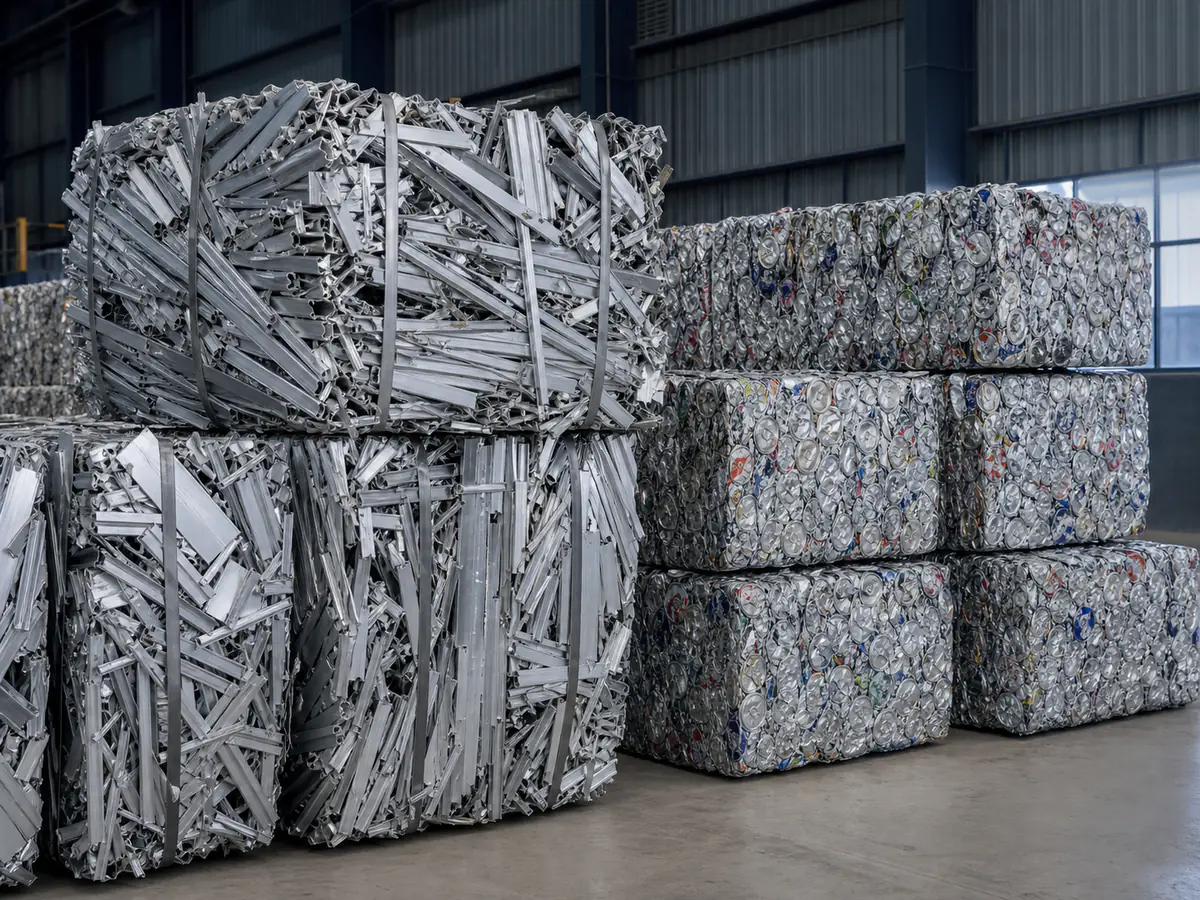
When an Indian buyer asks for your "best price CIF Chennai", they are asking for more than a number. The Incoterm in that request decides who pays the ocean freight, who buys the cargo insurance, and at what moment the risk of loss moves from you to the buyer. Get it wrong and a good price can turn into a disputed claim or a rejected document set.
Most metal scrap that moves to South India is quoted on one of two terms: CIF (Cost, Insurance and Freight) or CFR (Cost and Freight, sometimes written C&F or CNF). This guide explains how the two differ under the International Chamber of Commerce's Incoterms® 2020 rules, how Indian Customs treats each one, and what a scrap supplier should spell out in a quote.
The short version
CIF and CFR are almost the same rule. Under both, the seller books and pays the sea freight to the named port of destination, for example Chennai. Under both, the risk passes to the buyer once the goods are on board the vessel at the port of shipment. The only structural difference is insurance: under CIF the seller must buy cargo insurance for the buyer's benefit, and under CFR the seller has no insurance obligation at all.
The ICC's own guidance puts it plainly: the obligations under CIF "are essentially the same as those under CFR", except that under CIF the seller "must contract for insurance cover for the buyer against the risk of loss of or damage to the goods from the port of shipment to the port of destination" (ICC Academy (https://academy.iccwbo.org/incoterms/article/incoterms-2020-cfr-or-cif/)).
Where risk passes, and why that surprises people
A common misunderstanding is that a CIF Chennai seller carries the risk all the way to Chennai. They do not. Under both CIF and CFR, the buyer "bears all risks of loss of or damage to the goods from the time they have been delivered", and delivery happens on board the vessel at the port of loading (ICC Incoterms® 2020, Rules for Sea and Inland Waterway Transport (https://library.iccwbo.org/content/tfb/BOOKS/BK_0049/BK_0049_05_RulesSea.htm?l1=Books&l2=Incoterms%C2%AE+2020)).
So if a container of alloy wheel scrap is damaged at sea between, say, Rotterdam and Chennai, the loss is the buyer's under both terms. The difference is what the buyer can do about it. Under CIF, the buyer claims on the policy the seller bought. Under CFR, the buyer claims on its own insurance, if it arranged any.
The ICC also notes that a CIF seller "does not promise to ensure that the goods arrive at the destination intact, in the specified quantity, or at all" (ICC Academy (https://academy.iccwbo.org/incoterms/article/incoterms-2020-cfr-or-cif/)). The seller's job is to ship conforming goods, contract the carriage and, under CIF, provide the insurance.
What CIF insurance actually has to cover
Under Incoterms® 2020, CIF sets a minimum standard for the policy. Unless the parties agree otherwise, the seller must obtain cover that complies with Clauses (C) of the Institute Cargo Clauses, or similar clauses. The policy must:
- cover at least the contract price plus 10%, that is 110%, in the currency of the contract; - run from the point of delivery to at least the named port of destination; - let the buyer, or anyone else with an insurable interest, claim directly from the insurer; and - be evidenced by a policy or certificate handed to the buyer.
All four points come from article A5 of the CIF rule (ICC Incoterms® 2020 (https://library.iccwbo.org/content/tfb/BOOKS/BK_0049/BK_0049_05_RulesSea.htm?l1=Books&l2=Incoterms%C2%AE+2020)).
Institute Cargo Clauses (C) is a minimum, named-perils cover. If an Indian buyer wants wider cover, such as Clauses (A) or war and strikes cover, that has to be agreed in the contract. Under the CIF rule, the seller provides extra cover at the buyer's request and at the buyer's cost, if it can be obtained.
For a supplier, the practical takeaway is to check the buyer's purchase order or LC wording. If it says "insurance for 110% of invoice value covering Institute Cargo Clauses (A)", a Clauses (C) certificate will not do.
How Indian Customs values CIF and CFR shipments
Indian import duty is charged on the value of the goods delivered at the place of importation, which includes freight and insurance. Rule 10(2) of the Customs Valuation (Determination of Value of Imported Goods) Rules, 2007, as amended in 2017, says the value shall include the cost of transport, loading, unloading and handling to the place of importation, and the cost of insurance to that place (amendment text via SCC Online (https://www.scconline.com/blog/post/2017/10/12/customs-valuation-determination-value-imported-goods-amendment-rules-2017-notified/); original rules on India Code (https://upload.indiacode.nic.in/showfile?actid=AC_CEN_2_2_00042_196252_1534829466423&filename=Customs+Valuation+Determination+of+Value+of+Imported+Goods+Rules++2007.pdf&type=rule)).
On a CIF invoice, freight and insurance are already in the price. On a CFR invoice, insurance is missing, so the rules fill the gap: where the cost of insurance is not ascertainable, it is taken as 1.125% of the FOB value. Where freight is not ascertainable, it is taken as 20% of the FOB value.
This matters to suppliers for one reason: your invoice should show the figures your buyer's customs broker needs. On a CFR invoice, it helps to show the freight element separately. On a CIF invoice, the insurance certificate should match the invoice value and currency. Clean, consistent numbers make for a faster clearance, which means a happier buyer and a smoother repeat order.
A note on containers
Incoterms® 2020 places CIF and CFR among the rules for sea and inland waterway transport. Practitioners often point out that for containerised cargo, which is handed to the carrier at a terminal before it is loaded on board, the "on board" risk point can leave a gap between handover and loading (SSLT Global practitioner's guide (https://ssltglobal.com/guides/incoterms-2020)). The ICC's alternatives for that situation are CPT and CIP.
In practice, much containerised scrap to India is still traded CIF or CFR because buyers, banks and LCs are built around those terms. If you do the same, know that your exposure runs until the container is actually on board, and insure that leg if you need to.
Why Chennai, and what "CIF Chennai" should name
Chennai is one of the sea ports India designates for imports of unshredded metallic waste and scrap, along with nearby Ennore, Kamarajar and Kattupalli (DGFT Handbook of Procedures 2023, para 2.51 (https://content.dgft.gov.in/Website/dgftprod/e1cb52ea-0c3a-4c2a-8cd7-dd992e9bdc98/HBP_2023.pdf)). That makes it a natural destination for buyers in Tamil Nadu and the wider south.
Because several ports serve the Chennai region, name the exact port in your quote: "CIF Chennai Port, India, Incoterms® 2020" rather than "CIF Chennai area". If the buyer will clear the cargo at an inland container depot, make sure the contract still names the sea port of discharge as the CIF point.
What a clear scrap quote should include
Whichever term you use, a quote that an Indian buyer can act on quickly usually covers:
1. Material and grade, for example clean aluminium alloy car wheels, with your attachment and contamination limits. 2. Quantity, in metric tonnes and number of 40ft containers, plus the loading weight per container you can achieve. 3. Price per metric tonne, with the Incoterm, the named port and the Incoterms® version, for example "USD per MT, CIF Chennai Port, Incoterms® 2020". 4. Insurance terms if CIF: the clauses (C or A) and the 110% minimum. 5. Shipment period and the port of loading. 6. Payment terms, such as LC at sight, and the documents you will present. 7. Pre-shipment inspection arrangements where the buyer's import rules require a certificate.
CIF or CFR: how to choose
Quote CIF when the buyer asks for it, when you can buy marine cover cheaply under an open policy, or when the buyer's LC calls for an insurance document. Quote CFR when the buyer has its own marine policy in India and prefers to insure locally. Either way, freight and the on-board risk point are the same, so the real conversation is about who insures and on what clauses.
Working with Metrox Overseas
Metrox Overseas buys aluminium scrap, including alloy wheel scrap, for delivery to Indian ports, usually on CIF Chennai terms. If you have regular material and want a clear, documented route into India, write to us at metroxoverseas@gmail.com with your material, monthly quantity, photos and your best CIF Chennai price.
---
Sources
- International Chamber of Commerce, Incoterms® 2020, Rules for Sea and Inland Waterway Transport (CFR and CIF, articles A2, A5 and B3): https://library.iccwbo.org/content/tfb/BOOKS/BK_0049/BK_0049_05_RulesSea.htm - ICC Academy, "CFR & CIF Incoterms® 2020 explained: Key differences": https://academy.iccwbo.org/incoterms/article/incoterms-2020-cfr-or-cif/ - Customs Valuation (Determination of Value of Imported Goods) Rules, 2007, India Code: https://upload.indiacode.nic.in/showfile?actid=AC_CEN_2_2_00042_196252_1534829466423&filename=Customs+Valuation+Determination+of+Value+of+Imported+Goods+Rules++2007.pdf&type=rule - Customs Valuation Amendment Rules, 2017 (G.S.R. 1202(E)), via SCC Online: https://www.scconline.com/blog/post/2017/10/12/customs-valuation-determination-value-imported-goods-amendment-rules-2017-notified/ - DGFT, Handbook of Procedures 2023, para 2.51: https://content.dgft.gov.in/Website/dgftprod/e1cb52ea-0c3a-4c2a-8cd7-dd992e9bdc98/HBP_2023.pdf - SSLT Global, "Incoterms 2020 Explained: A Practitioner's Guide": https://ssltglobal.com/guides/incoterms-2020