Metal trading insights
Exporting Aluminium Alloy Wheel Scrap (Troma) to India: Specs, Documents and Process
A practical guide for overseas scrap yards shipping aluminium alloy wheel scrap (ISRI Troma) to India: what the spec means, how to load it, which documents the LC will call for and which ports to use.
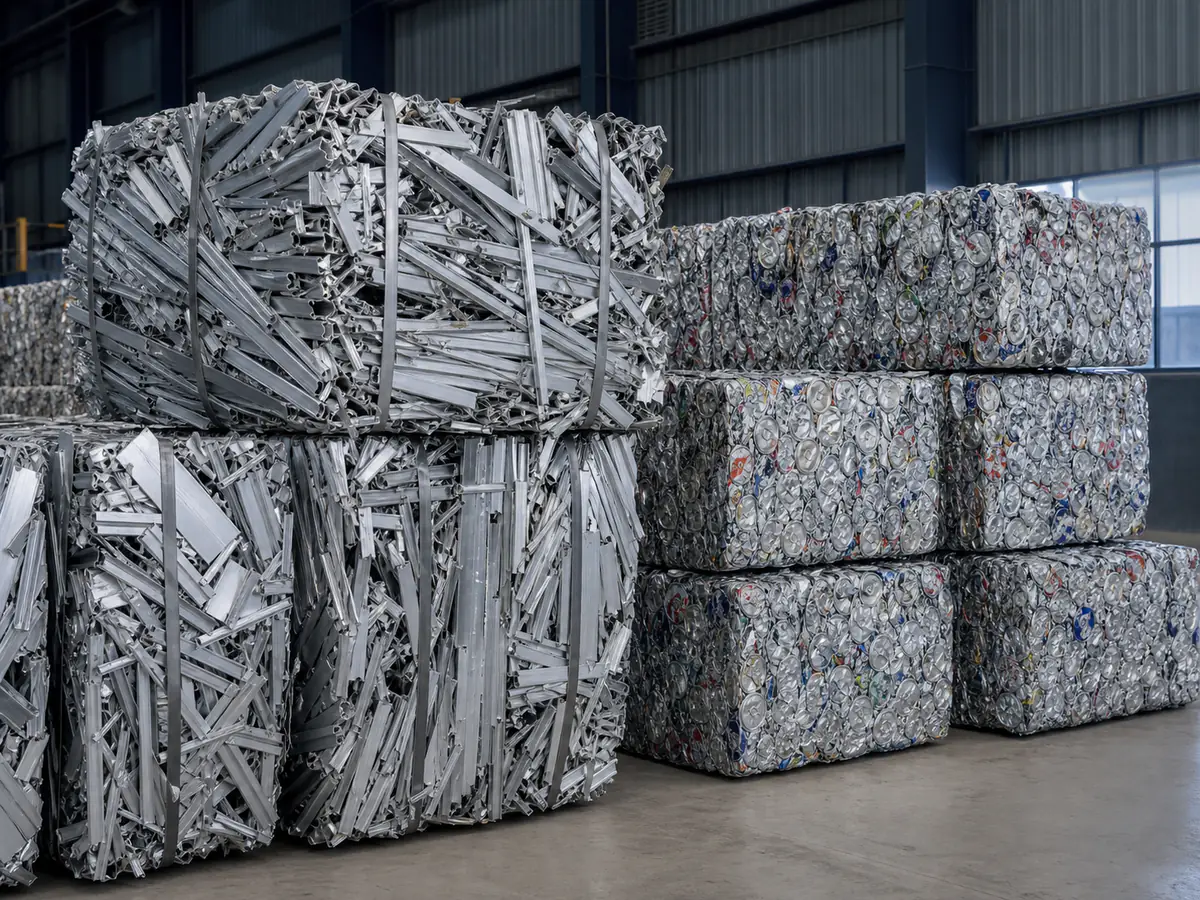
Indian secondary smelters and alloy makers value clean aluminium alloy wheels because they are a consistent casting alloy that melts with good recovery. For scrap yards in Europe, the Gulf and South-East Asia, a well-prepared Troma container is one of the simpler non-ferrous shipments to sell. When problems do happen, they almost always come from quality claims or paperwork, not the metal.
This guide covers the spec, buyer expectations, loading, documents, payment and ports.
WHAT IS TROMA? THE ISRI DEFINITION
"Troma" is the ISRI (now ReMA) code for Aluminum Auto or Truck Wheels. The specification reads:
"Shall consist of clean, single-piece, unplated aluminum wheels of a single specified alloy, free of all inserts, steel, wheel weights, valve stems, tires, grease and oil and other non-metallic items. Variations to this specification should be agreed upon prior to shipment between the buyer and seller." (ReMA/ISRI Specifications: https://www.isrispecs.org/orpheus_resource/aluminum-auto-or-truck-wheels/)
In short: single-piece wheels, no chrome or other plating, one alloy, no attachments, and no oil, dirt or non-metallics.
QUALITY EXPECTATIONS FROM INDIAN BUYERS
Car wheels, not truck wheels
The ISRI title says "auto or truck", but most Indian buyers of Troma, including us, contract for passenger car alloy wheels only. Car wheels are generally cast, while many truck and bus wheels are forged from a different wrought alloy. Mixing the two breaks the "single specified alloy" condition and changes the melt chemistry. If you have truck wheels, offer them as a separate lot with their own description and price.
No chrome, no plated or "polished-look" coatings
Sort out chrome-plated and other plated wheels. Ordinary painted or powder-coated car wheels are normal material. If you are unsure about decorative wheels, send close-up photos before loading.
Attachments and contamination
Expect the buyer to check for:
- Lead or zinc balancing weights (clip-on and stick-on) - Steel valve stems, TPMS sensors and centre-cap inserts - Tyre rubber or tyre pieces left on the rim - Steel bolts, studs or other iron - Excessive dirt, mud, oil or water
ISRI's text says "free of all" of these. If you and the buyer agree any tolerance, write it into the contract as a specific percentage or weight. Don't rely on a verbal "small amount is fine". Disputes at destination nearly always come back to an attachment level nobody wrote down.
Photos before contract, photos during loading
Serious buyers ask for photos of the actual stock before agreeing a price, and for loading photos of each container afterwards. Having them ready shortens negotiation and protects you if there is a claim.
PACKING AND LOADING
Loose vs baled
Wheels can ship loose (hand- or machine-stacked) or baled/compressed. Many Indian buyers prefer loose wheels because they can see every wheel and check for inserts, weights and chrome. Baling increases weight per container but hides contamination, so some buyers will discount baled wheels or decline them. Agree the form before you quote.
Payload per 40ft container
How much fits depends on wheel size, how carefully they are stacked and whether they are baled. Trade listings for loose alloy wheels commonly quote somewhere around 18–23 metric tonnes per 40ft container. Baled material can load heavier, but it is capped by the shipping line's payload limit and local road-weight rules. Rather than relying on rules of thumb, state a minimum net weight per container in your offer and confirm your line's maximum payload.
Loading good practice
- Use clean, dry containers and stack evenly so the load does not shift. - Record the container number, seal number and weighbridge ticket for every unit. - If a pre-shipment inspection is required, do not seal until the inspector has witnessed stuffing and sealing.
DOCUMENTS FOR SHIPPING TROMA TO INDIA
1. Pre-shipment inspection certificate (PSIC)
Under India's Foreign Trade Policy, aluminium scrap (ITC-HS 7602 00 10) can be imported freely, subject to conditions in Para 2.51 of the DGFT Handbook of Procedures 2023. For un-shredded scrap such as loose or compressed wheels, the importer must give Customs a PSIC in the Appendix 2H format, issued by an agency listed in Appendix 2G. The certificate confirms that the consignment contains no arms, ammunition, shells, cartridges or other explosive material, and that radiation (gamma and neutron) is not above natural background (DGFT HBP 2023, Para 2.51: https://content.dgft.gov.in/Website/dgftprod/e1cb52ea-0c3a-4c2a-8cd7-dd992e9bdc98/HBP_2023.pdf).
An important exception: scrap originating in the USA, UK, Canada, New Zealand, Australia and the EU does not need a PSIC if it is cleared through one of 11 listed ports, including Chennai, JNPT and Mundra. Instead, it must carry a certificate from the supplier or scrap yard stating that it contains no radioactive material or explosives, and it is still scanned at the port. This facility does not apply to material from other origins that is merely trans-shipped through those countries (DGFT Public Notice 43/2023: https://worldtradescanner.com/43-PN-DGFT-14.02.2024.htm). Many buyers still ask European suppliers for a PSIC as a contract term, so check what your contract says.
For Gulf and South-East Asian origins, plan on a PSIC for every shipment. Our companion article, "Pre-Shipment Inspection for Metal Scrap Imports into India", explains the process step by step.
2. Commercial documents
- Commercial invoice: description (e.g. "Aluminium alloy wheel scrap, ISRI Troma"), HS code, quantity, unit price, Incoterm (CFR/CIF Chennai) and total value. - Packing list / weight list: net and gross weight, container and seal numbers. - Bill of lading: full set of clean, on-board ocean bills, consigned as the LC requires. - Certificate of origin: usually from a chamber of commerce in the country of export. - Insurance certificate: for CIF sales. - Supplier declaration: stating that the cargo contains no radioactive, explosive or hazardous material.
The Indian importer handles its own filings, such as Form 6 under Rule 13 of the Hazardous and Other Wastes Rules, 2016: https://www.npcindia.gov.in/NPC/Files/delhiOFC/EM/Hazardous-waste-management-rules-2016.pdf, which lists aluminium scrap in Schedule III Part D. Accurate descriptions and weights on your documents make that step smooth.
On BIS: India's aluminium Quality Control Order covers finished aluminium products, not scrap. At the time of writing, no mandatory BIS standard for aluminium scrap has been notified (QCO 2026: https://worldtradescanner.com/DPIIT%20Order%20S.O.%201319(E%20dated%2011%20March%202026.htm)).
PAYMENT: LC AT SIGHT
Most Troma business into India runs on CFR or CIF terms against an irrevocable letter of credit (LC) payable at sight. In practice:
1. Agree the contract: grade, quantity, tolerance, price, shipment period and the document list. 2. The buyer opens the LC. Check every document requirement before you load. 3. You ship, collect the documents and present them to your bank within the LC's presentation period. 4. If the documents comply, payment is released.
Most LC delays come from document mismatches: an invoice description that differs from the LC, a missing PSIC, or a B/L date outside the shipment window.
TYPICAL PORTS OF DISCHARGE
Un-shredded metal scrap can only enter India through designated sea ports with radiation portal monitors and container scanners. Nineteen are listed, including Chennai, Kamarajar (Ennore), Kattupalli, Mundra, JNPT (Nhava Sheva), Mumbai, Kandla, Tuticorin and Krishnapatnam (DGFT PN 43/2023: https://worldtradescanner.com/43-PN-DGFT-14.02.2024.htm). For alloy wheels:
- Chennai serves the large secondary-aluminium and auto-component cluster in South India, and is our main port of discharge. - Mundra and Nhava Sheva (JNPT) serve buyers in western and northern India.
Confirm the exact port of discharge in the contract and LC. Un-shredded scrap sent to a non-designated port can't be cleared there.
SEND US YOUR TROMA OFFER
Metrox Overseas buys aluminium alloy wheel scrap (Troma) on CFR/CIF terms, mainly for discharge at Chennai, against LC. If you have clean car alloy wheels available, email metroxoverseas@gmail.com with:
- Quantity (number of containers and estimated tonnage) - Recent photos of the actual material - Your CFR/CIF Chennai price and shipment period
You can also reach us on +91 98171 83438 or +91 70829 70740. We reply with clear terms and the document list up front.
SOURCES
1. ReMA / ISRI Scrap Specifications – Troma, Aluminum Auto or Truck Wheels: https://www.isrispecs.org/orpheus_resource/aluminum-auto-or-truck-wheels/ 2. ReMA ISRI Specifications Circular (2026 edition, PDF): https://www.isrispecs.org/wp-content/uploads/2026/01/2026-January-ReMA_ISRI_Specifications.pdf 3. DGFT Handbook of Procedures 2023, Paras 2.51–2.53 (Import of Metallic Waste and Scrap; PSIA/PSIC): https://content.dgft.gov.in/Website/dgftprod/e1cb52ea-0c3a-4c2a-8cd7-dd992e9bdc98/HBP_2023.pdf 4. DGFT Public Notice No. 43/2023 dated 14 Feb 2024 (designated ports and PSIC-exempt ports, amended Para 2.51): https://worldtradescanner.com/43-PN-DGFT-14.02.2024.htm 5. Hazardous and Other Wastes (Management and Transboundary Movement) Rules, 2016 – Rule 13 and Schedule III Part D (NPC/MoEFCC guidance): https://www.npcindia.gov.in/NPC/Files/delhiOFC/EM/Hazardous-waste-management-rules-2016.pdf 6. Aluminium and Aluminium Alloy Products (Quality Control) Order, 2026, S.O. 1319(E): https://worldtradescanner.com/DPIIT%20Order%20S.O.%201319(E)%20dated%2011%20March%202026.htm 7. Directorate General of Foreign Trade (official portal): https://www.dgft.gov.in