Metal trading insights
Pre-Shipment Inspection for Metal Scrap Imports into India: What Suppliers Need to Know
Most metal scrap shipments to India need a pre-shipment inspection certificate (PSIC) unless a specific exemption applies. Here is what the PSIC covers, who can issue it and how to keep it from holding up your shipment.
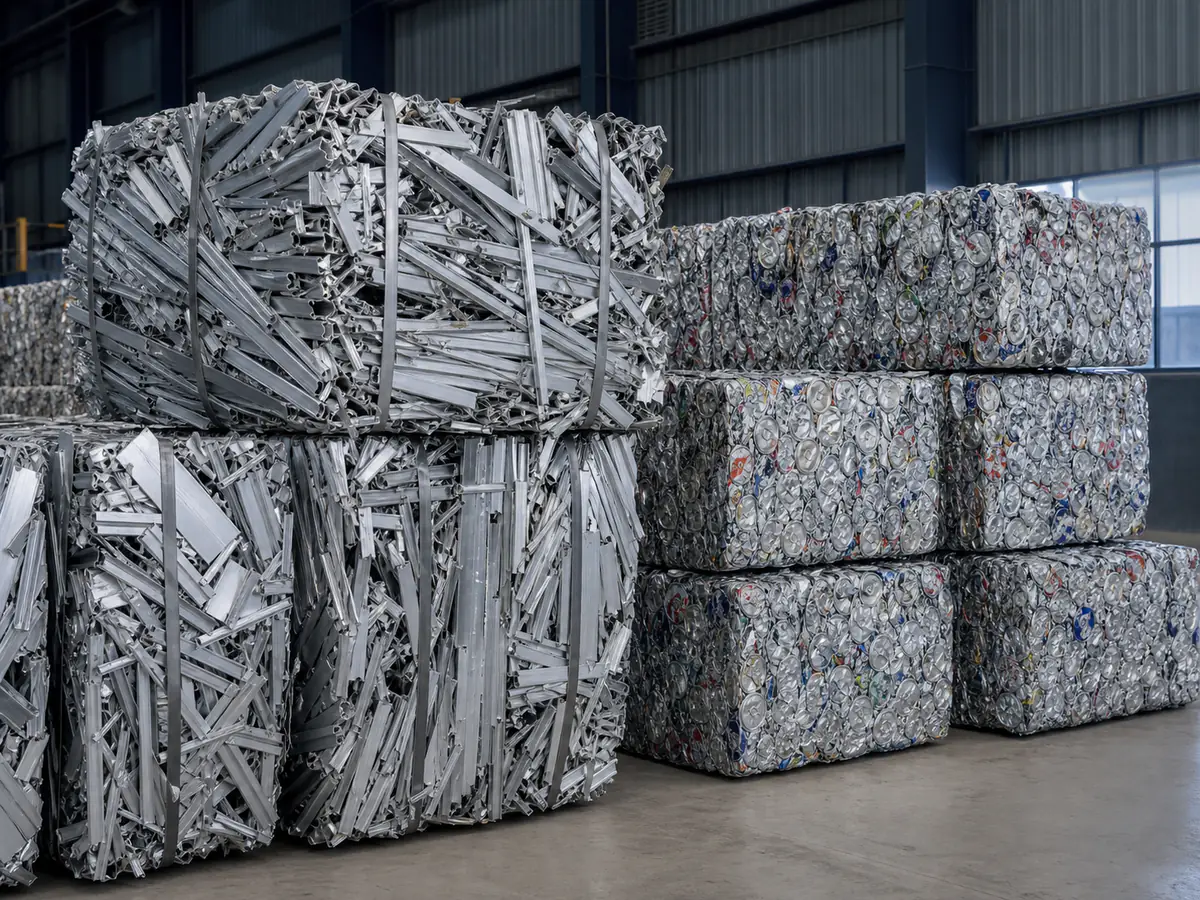
If you sell metal scrap to India, the pre-shipment inspection certificate (PSIC) is the document most likely to decide whether your container clears quickly or sits at the port. It isn't complicated, but it has to be done by the right agency at the right moment.
WHY INDIA REQUIRES PRE-SHIPMENT INSPECTION
India's Foreign Trade Policy allows common metal scraps, including aluminium, copper, brass, zinc and steel scrap, to be imported freely. That freedom comes with a basic condition: imported scrap must not contain hazardous or toxic waste, radioactive contamination, or "any type of arms, ammunition, mines, shells, live or used cartridge or any other explosive material" (DGFT Handbook of Procedures 2023, Para 2.51: https://content.dgft.gov.in/Website/dgftprod/e1cb52ea-0c3a-4c2a-8cd7-dd992e9bdc98/HBP_2023.pdf).
Scrap yards worldwide occasionally receive orphan radioactive sources and military debris, so India checks for both. It does this at two points: at origin through the PSIC, and at Indian ports through radiation portal monitors and container scanners.
When a PSIC is required
- Un-shredded scrap (loose or compressed): a PSIC certifying no arms, ammunition or explosives, and radiation (gamma and neutron) not above natural background. - Shredded scrap: a PSIC certifying the radiation check. - In both cases the importer must also give Customs a copy of the contract in which the exporter states the cargo contains no radioactive-contaminated material (and, for un-shredded scrap, no arms or explosives).
The safe-country exception
Scrap originating in the USA, UK, Canada, New Zealand, Australia and the EU doesn't need a PSIC if it is cleared through one of 11 listed ports: Chennai, Tuticorin, Kandla, JNPT, Mumbai, Krishnapatnam, Mundra, Kattupalli, Hazira, Kamarajar and Adani Gangavaram. In those cases a certificate from the supplier or scrap yard (stating no radioactive material or explosives) goes with the shipment, and the containers are scanned at the port. Trans-shipments through these countries don't qualify, and every other port needs a PSIC whatever the origin (DGFT Public Notice 43/2023: https://worldtradescanner.com/43-PN-DGFT-14.02.2024.htm).
For suppliers in the Gulf, South-East Asia, Africa and elsewhere, the PSIC is mandatory. Even for European cargo, many Indian buyers write a PSIC into the contract anyway.
WHO CAN ISSUE THE CERTIFICATE: DGFT-RECOGNISED AGENCIES
Only a Pre-Shipment Inspection Agency (PSIA) listed in Appendix 2G of the Foreign Trade Policy can issue a valid PSIC. Key points:
- An Inter-Ministerial Committee approves PSIAs, and each is notified for three years, then must reapply (HBP Para 2.52). - Each PSIA is approved for specific countries or regions of operation and specific instruments. An agency approved for the UAE can't automatically certify a container in Malaysia. - DGFT updates the list regularly. Recent public notices added new agencies and removed those whose approval expired (PN 36/2025-26: https://worldtradescanner.com/36-PN-DGFT-10.12.2025.htm; PN 08/2026-27: https://worldtradescanner.com/08-PN-DGFT-08.05.2026.htm). - The current list and each agency's area of operation are published on the DGFT website: https://www.dgft.gov.in under Services → Pre-Shipment Inspection Agencies (PSIA).
Practical tip: before you book, check that the agency is currently listed and approved for your country. A certificate from an unlisted or expired agency gives the importer no protection at Indian Customs.
WHAT THE INSPECTOR CHECKS
Radiation (statutory)
The inspector surveys the scrap with calibrated radiation instruments, checking gamma and neutron levels. The PSIC must record the background radiation level at the site and the maximum level measured on the scrap, and confirm it doesn't exceed natural background.
Arms, ammunition and explosives (statutory)
The inspector visually checks the material as it is loaded for shells, cartridges, sealed cylinders, closed containers and anything else that could hold explosives. This is why stuffing must be witnessed.
Composition, grade and weight (commercial, often combined)
The PSIC itself is a safety certificate, not a quality certificate. It doesn't certify that your material meets ISRI Troma, Taint/Tabor or any other grade. Buyers often appoint the same agency, or another surveyor, to check grade, contamination and weight at the same visit. If your contract calls for that, it is a separate report. Agree its scope in advance.
Photo and video evidence
DGFT requires the PSIA to capture and upload (HBP Para 2.53: https://content.dgft.gov.in/Website/dgftprod/e1cb52ea-0c3a-4c2a-8cd7-dd992e9bdc98/HBP_2023.pdf):
- the inspector at the inspection site, with date and time - the testing instruments used - stuffing of each container, with the container number visible - sealing of each container - the inspector beside the empty container (one door closed, number readable), and again with the sealed container - the instrument together with the container seal, with the seal number and instrument serial number in the same photo
THE CERTIFICATE ITSELF
The PSIC follows the Appendix 2H format and is generated online through the DGFT portal by the PSIA, after the inspection. Its declaration states that the consignment contains no arms, ammunition, mines, shells, cartridges or explosives, and that radiation is not above natural background. The PSIA uploads the signed inspection report, photos and video, and a scanned copy of the certificate.
Because the PSIC sits on the DGFT system, Indian Customs can check it against the container and seal numbers on your bill of lading. Any mismatch is a red flag. The importer and exporter are also jointly and severally responsible for the cargo matching the PSIC declaration, and can face penalties under India's Foreign Trade (Development & Regulation) Act if it doesn't (HBP Para 2.53).
TIMING: WHEN TO BOOK
The inspection has to happen while containers are being stuffed and sealed. It can't be done after the boxes are closed. A practical sequence:
1. Confirm the contract, the LC terms and whether a PSIC is required. 2. Choose a PSIA that is listed and approved for your country. 3. Book the inspector a few working days ahead, giving the yard address, number of containers and loading date. 4. Load and seal under the inspector's supervision. 5. The PSIA issues the PSIC online. Get the PDF and check every container and seal number. 6. Include the PSIC in your LC document set.
HOW TO AVOID DELAYS
- Check the PSIA's listing and region first. It is the most expensive mistake to fix later. - Keep numbers consistent. Container and seal numbers must match across the PSIC, packing list and B/L. - Never re-seal or swap containers after inspection without the inspector present. - Pre-sort the scrap. Remove closed cylinders, gas bottles, shock absorbers and sealed objects before loading. If one is found, the inspection can stop. - Use the right port. Un-shredded scrap must go to one of the designated ports listed in HBP Para 2.51, such as Chennai, Mundra or JNPT. - Match the LC wording. If the LC asks for a "PSIC issued by a DGFT-recognised agency as per Appendix 2H", the certificate must say exactly that.
READY TO SHIP TO INDIA?
Metrox Overseas imports aluminium alloy wheel scrap (Troma) and other non-ferrous grades into India, mainly through Chennai, on CFR/CIF terms against LC. We tell suppliers the document and inspection requirements at the start, so there are no surprises at loading.
If you have material available, send your offer to metroxoverseas@gmail.com with the quantity, recent photos of the material and your CFR/CIF Chennai price. You can also call +91 98171 83438 or +91 70829 70740.
SOURCES
1. DGFT Handbook of Procedures 2023 – Para 2.51 (Import of Metallic Waste and Scrap), Para 2.52 (Recognition of PSIA and issuance of PSIC), Para 2.53 (Responsibility and liability of PSIA and importer): https://content.dgft.gov.in/Website/dgftprod/e1cb52ea-0c3a-4c2a-8cd7-dd992e9bdc98/HBP_2023.pdf 2. DGFT Public Notice No. 43/2023 dated 14 Feb 2024 – amendment of Para 2.51 (designated ports; PSIC-exempt ports for safe countries): https://worldtradescanner.com/43-PN-DGFT-14.02.2024.htm 3. DGFT Public Notice No. 10/2023 dated 26 Apr 2023 – Appendix 2H (PSIC format) declaration: http://worldtradescanner.com/10-PN-DGFT-26.04.2023.htm 4. DGFT Public Notice No. 36/2025-26 dated 10 Dec 2025 – revised Appendix 2G list of empanelled PSIAs: https://worldtradescanner.com/36-PN-DGFT-10.12.2025.htm 5. DGFT Public Notice No. 08/2026-27 dated 8 May 2026 – enlistment and updating of PSIAs in Appendix 2G: https://worldtradescanner.com/08-PN-DGFT-08.05.2026.htm 6. Directorate General of Foreign Trade – PSIA list and areas of operation (Services → Pre-Shipment Inspection Agencies): https://www.dgft.gov.in